
Bodies in Time
How can photography help us notice and shift our bodies' relationship to time? + New Practice Group with Kinship Photography Collective.

How do you feel time in your body?
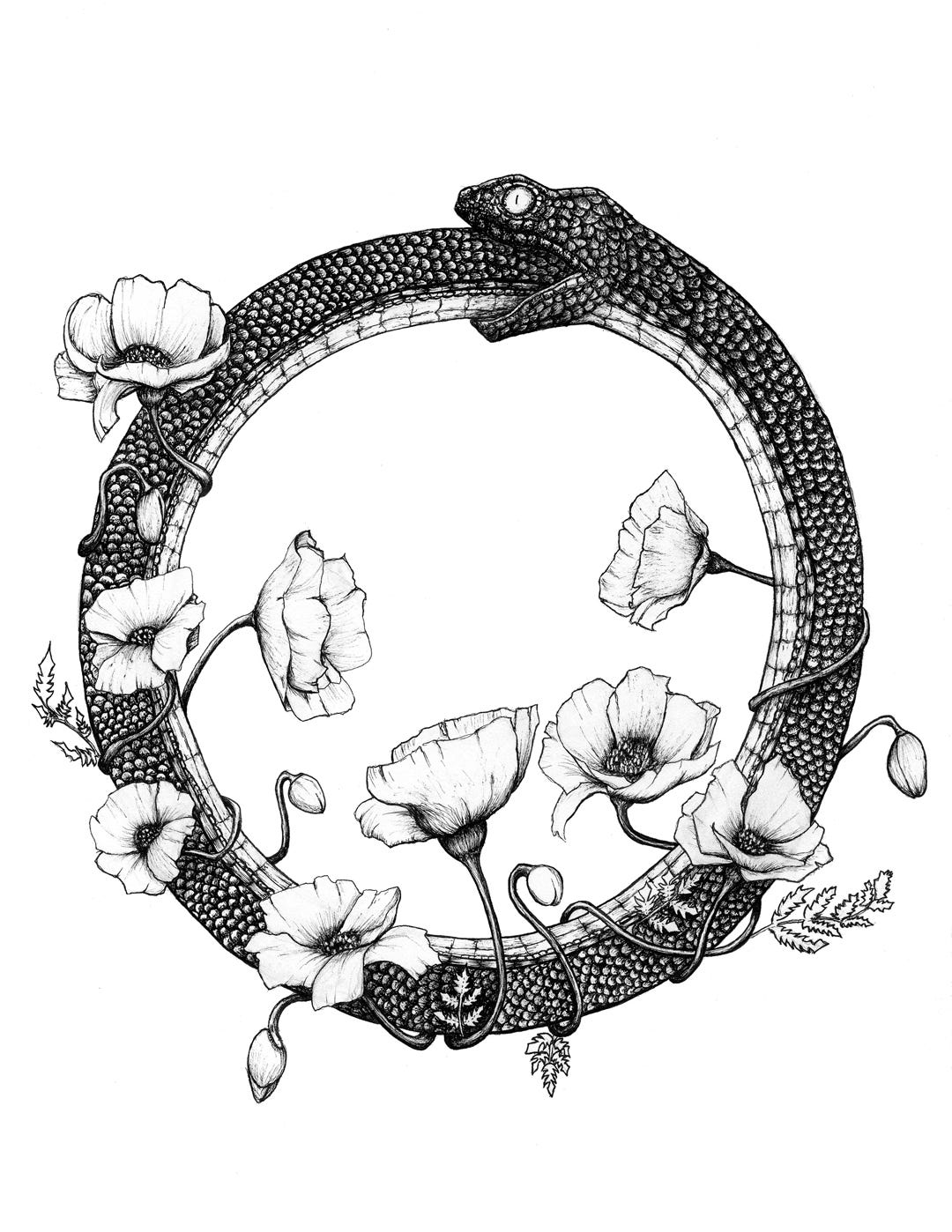
Ouroboros, the snake eating herself in perpetuity. The cells of my body decay and regenerate again and again-every cell averages a 7 year lifespan. I am continuously made anew. My thumbs hold the contour of my mother’s thumbs, my nose the echo of my father’s nose. I hold the past here in the shape of me, generations of genetic expression and passed down traits. My body is a record of deep ancestral time, as well as a record of the time I inhabit now-scars tell tales of surgery and kitchen mishaps, scraped knees and the memory of every new shoe recorded as a permanent blister mark on my heel.
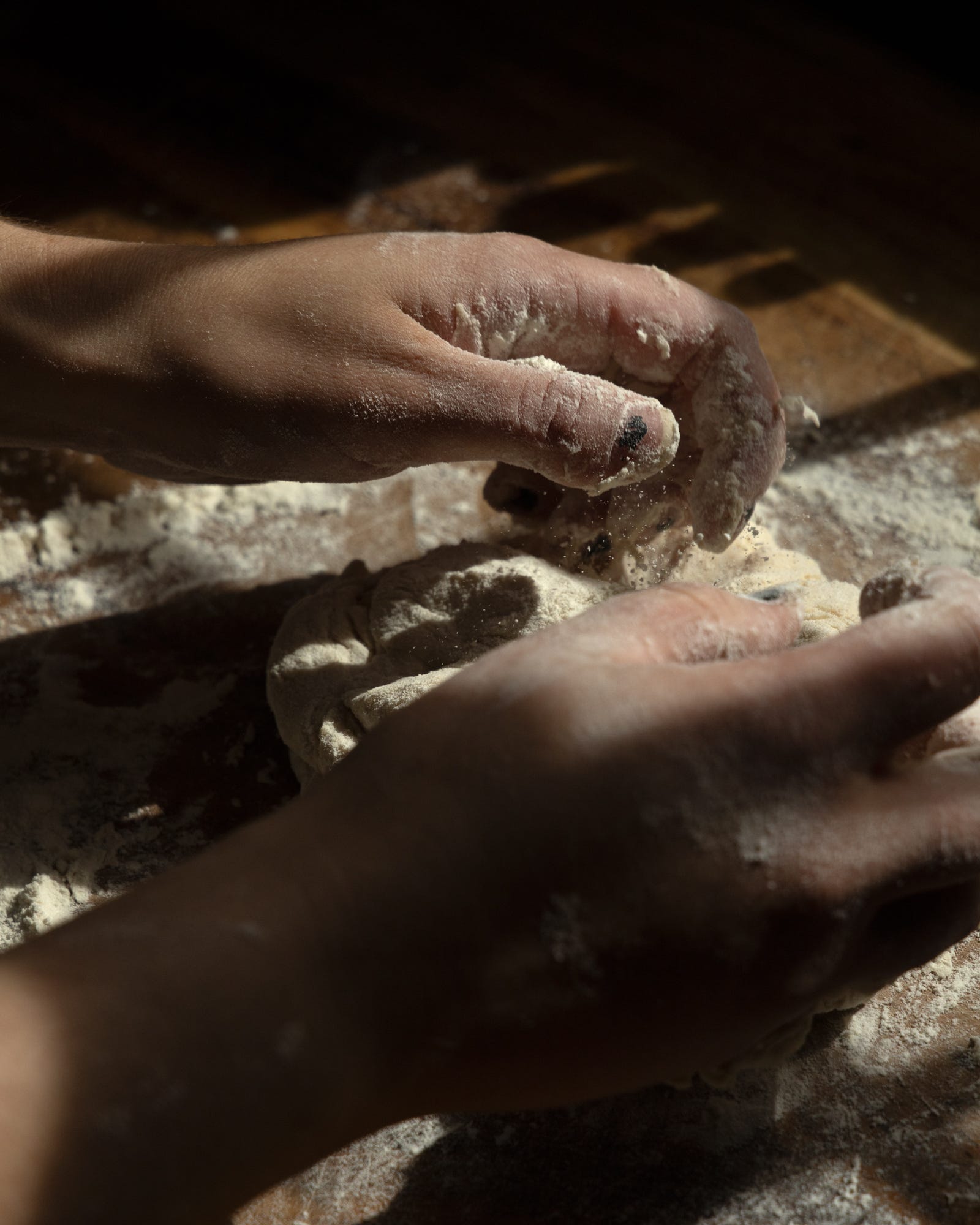


Time has always felt nonlinear to me. I have an innate unreliable gauge of time-to participate in communal calendar time requires a lot of effort, calendars, and a hypervigilance of time itself. I have had dreams that feel like memories in my mind, have had memories that take hold of the present, hijacking my nervous system to juxtapose patterns of like experiences atop one another. I can daydream with a veracity that overtakes the present and spins a future before my mind’s eye.
To photograph is to enter time, a stillness, a moment of eternity. Before the camera my body is made into a fragment of being. In my practice I do not consider this a form of truth-making, but a mark of perspective and context. My body before the camera becomes intertwined with setting, with landscape, with the time in which it was made. I am made hyperaware of time, the context in which I am photographing, searching for that moment in which I am compelled to trigger the shutter. Simultaneously, I release time, feel the clock stand-still, enter a state in which I do not register the passing moments because I am truly within them.
Alison Kafer writes, “rather than bend disabled bodies and minds to meet the clock, crip time bends the clock to meet disabled bodies and minds.” This warping of time is alive in my disabled, neurodivergent bodymind, both in my neurologic perception of time, as well as the incongruency between the natural rhythms of my body against the standardized clock of capitalism. I see photography as one of the ways I enter “crip time,” making obvious the disjointed sense of time that I experience through creating a visual representation of a moment dislocated from the flow of time. To view a photograph, and really see into that photograph rather than passively consume a photograph, is to pause, to enter a non-normative flow of time, even just briefly.
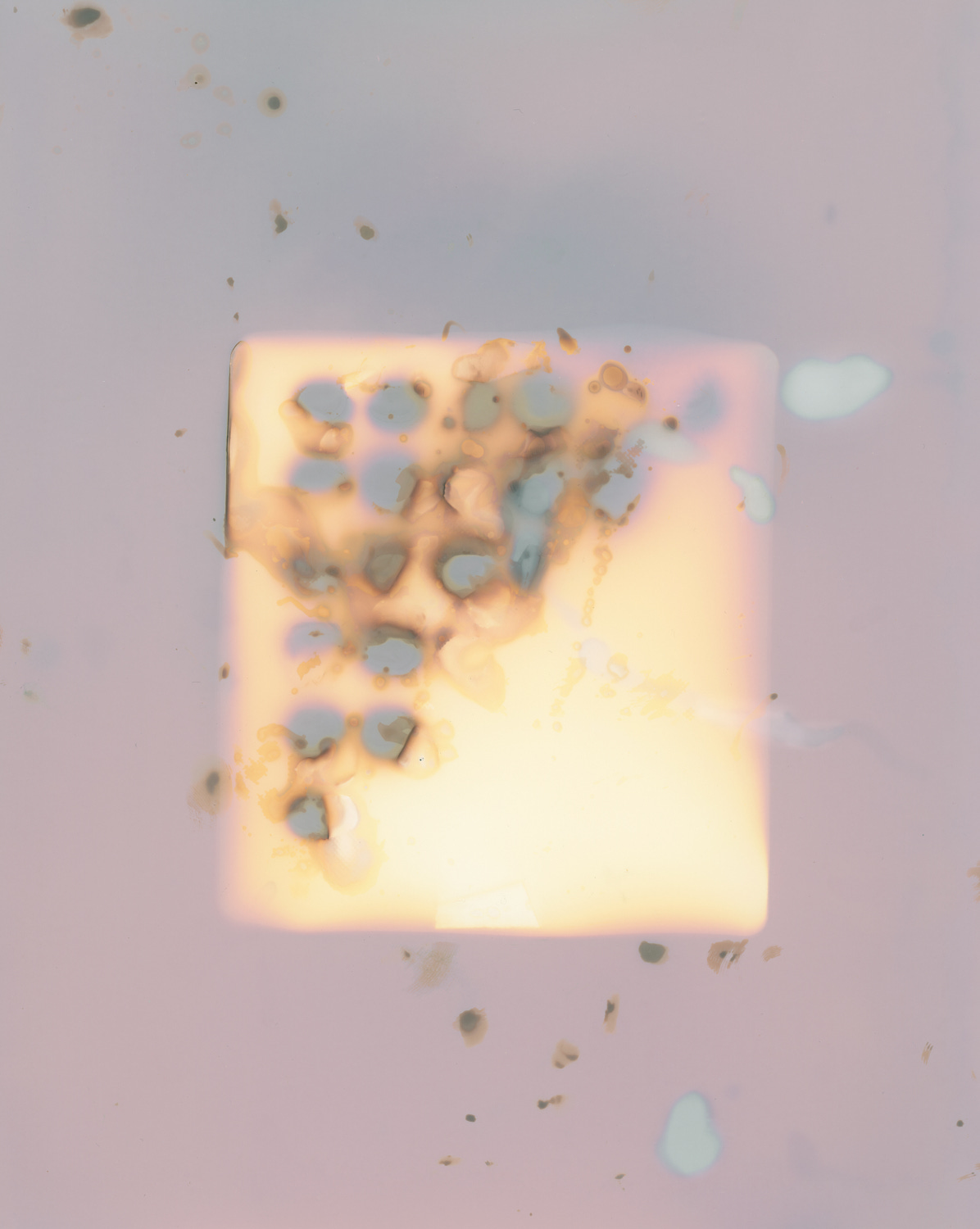
My work has always dwelled in non-linearity. In my first serious photography project A Family of Complicated Bodies, I have always consciously sequenced its presentation to highlight the ongoing-ness of chronic illness and disability in direct contradiction to a social perception of linear healing. The expectation is that one becomes sick, is diagnosed, is treated, and returns to a pre-illness wellness. Yet in chronic illness, the body becomes a site of perpetual present, or, in my experience, a reminder of the simple fact that all our bodies are changing at all times, that to live is to live within our mortality, not despite it.
In other works, I have explored the present experience of my body in acute illness, yet even after the passing of that illness, my body has been forever changed. Healing time is non-linear-I find myself often living a paradox that I am the healthiest I have ever been in my life, and yet use supports that others associate with poor health-medications, periodic mobility aids, heating pads, braces, etc. I live in a way that exists outside of the 9-5 structure because my body has asked to follow other rhythms, older rhythms, written by cells and beings and forces outside of mine or yours or ours.
A migraine is a temporal disruption. I remember the years I spent experiencing a near perpetual migraine as time spent in a timeless state. Sophie Strand writes “I think chronic pain (psychological and physical) stitches us to the white-hot present moment in a way that radically exceeds our ideas of good or bad medicine.” In those times of undefineable pain, I experienced a type of terrible and ecstatic presence that I cannot enter through meditation or mindfulness. I remember watching the sparkle of sunlight on the river, absorbed so completely by the light on the water, that I myself ceased to exist meaningfully. There was no imagined future, or intrusive past, only an unending present moment sharpened to an unbearable singularity.
I made photographs during those times, photographs that feel like time travelling when I view them because they signify moments that I was able to fleetingly reconnect to time. I no longer regularly experience the type of migraine that I experienced then, but they are still disruptions in time. Time spent resting feels different than time spent experiencing the world. Time spent resting in acceptance of that rest feels different than time spent yearning to not be resting. Time spent waiting feels different than time spent in action.
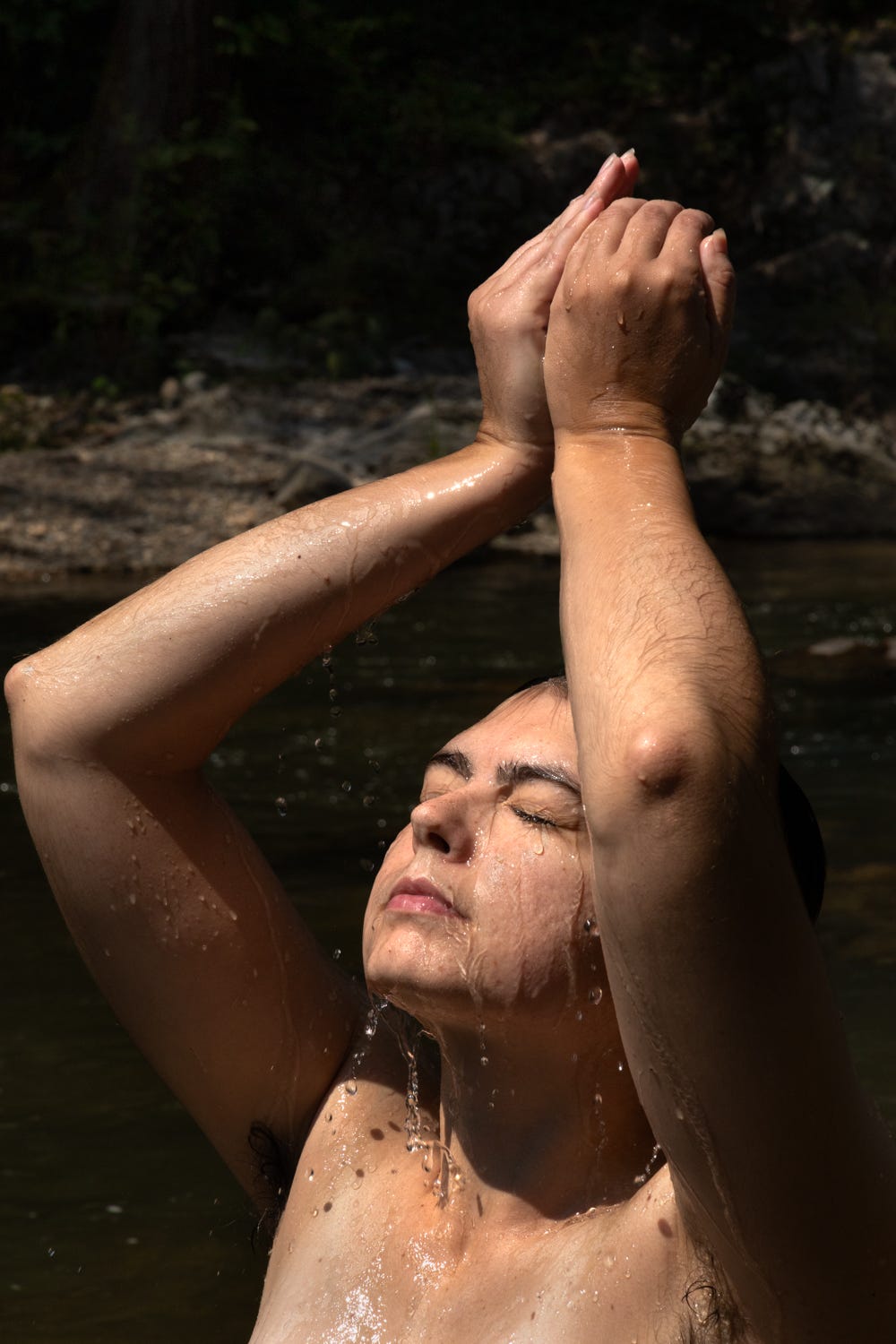
Silver glints as I comb the hair of my temples, seeing my early-greying genetics expressing themselves before my 30th birthday. I am moving through time, at times feeling like I am moving rapidly through time through the signs of aging I feel from having a connective tissue condition. Some days I move as though I’m decades older than I am. Yet, the same connective tissue condition causes me at times to look far younger, resulting in being carded for spray paint and wine.
My disabled body is a disruption to linearity, a reminder that our social structures around time were not entirely born of our bodies, but of the advent of electricity. I remember learning that humans used to have different sleep cycles, that waking up for an hour in the middle of the night was a largely unspoken, but common phenomenon. I think of my cyclical insomnia, how some nights I rise at 2-4am and cannot get back to sleep for an hour. I think of how excited my cat is to see me wake at night, how his purring can lull me back to sleep, the ways his internal clock shifts with my habits, yet also occupies its own more-than-human time.
Time can feel so abstract, and often in short supply, so how can photography shift time from the external, structured, and linear to an embodied and fluctuating time? Can photography help us imagine new rhythms of time that are rooted in both our individual, and interdependent and collective bodies? I find myself drawn to these questions in my practice more than ever, weaving together threads from work I’ve made over the past few years and following new tangents.
I’ll be facilitating a practice group with Kinship Photography Collective that asks questions like these, alongside those that you bring alongside your own photography practice. I hope you can join us on May 13th at 7pm EDT for our Practice Group Open House where you can meet and chat with the amazing facilitators from our community, and find a group that best supports your practice.